

The Ultimate Guide: How to Clean and Care for Your Jute Rug in Bangladesh
You bring home a beautiful hand-woven jute rug. It feels earthy, warm, and instantly makes your apartment in Dhaka look like a Pinterest board or a high-end Gulshan showroom.
Then life happens. A cup of tea spills during an adda. The city dust settles deep into the fibers. Or worse, the monsoon humidity hits, and your beautiful rug starts to smell a little "musty."
You start Googling "how to clean a jute rug" and realize - “uh ohhh” it is not like cleaning a synthetic carpet at all.
If that feels familiar, you are in the right place.
Jute is a natural plant fiber derived from the Corchorus plant. It loves dry floors, but it hates water. Treat it right, and it handles the Bangladeshi climate beautifully. Treat it wrong, and it becomes a soggy mess.
Here is the expert guide to keeping your jute rugs, placemats, and runners looking fresh, specifically tailored for our dusty and humid environment.
The Golden Rule: Why Jute is Different
You can soak a synthetic rug. You cannot soak jute.
Jute is hygroscopic. This means it acts like a sponge. It pulls moisture from the air and liquids instantly.
If it gets wet: The fibers swell and release natural oils that turn brown (technically called "cellulosic browning").
If it stays wet: In Bangladesh's humid weather, trapped moisture creates the perfect home for mildew and fungus. It can rot from the inside out.
If you remember one thing, let it be this: Keep it dry.
Quick Cheat Sheet: Do's and Don'ts
Need an answer fast? Use this table for safe cleaning methods.
The "Dhaka Dust" Protocol: Regular Jute Rug Maintenance
In cities like Dhaka or Chittagong, dust is the biggest enemy. It is not just dirt; it is abrasive grit. If it settles deep into the weave, it acts like sandpaper, cutting the fibers from the inside.
Here is your maintenance routine:
1. How to Vacuum Correctly
Vacuuming is the best way to clean a jute rug, but you must do it gently.
Turn off the Beater Bar: The rotating brush on your vacuum pulls at the loose fibers. It causes shedding and frizzing. Use the suction-only setting or a smooth floor attachment.
Follow the Weave: Vacuum in the direction of the braid, not against it. This keeps the rug smooth and prevents pulls.
Frequency: In Bangladesh, you should vacuum twice a week to keep up with the dust levels.
2. Don't Forget the Back
Dirt falls through the chunky weave and sits on the floor underneath. It acts like sandpaper on the floor and the rug.
The Routine: Once a month, roll up the rug. Vacuum the floor underneath. Then, vacuum the back of the rug itself. This removes the grit that cuts the fibers.
3. Rotation is Key
Jute is a natural, biodegradable fiber. Sunlight in Bangladesh is strong. If the sun hits the same spot every day, that spot will fade to a lighter golden color (a process called photodegradation).
Tip: Rotate your rug every 6 months. This ensures it wears and fades evenly, doubling its lifespan.
4. Use a Rug Pad (The Secret Weapon)
Many people in Bangladesh skip this, but a rug pad is vital for our climate.
Airflow: A felt pad allows air to circulate under the rug. This is crucial during the rainy season to prevent moisture buildup on the floor.
Cushioning: It stops the jute fibers from being crushed against the hard tile or marble floor.
How to Clean Spills & Stains (Step-by-Step)
Accidents happen. Here is how to fix them without ruining your rug.
Step 1: Dry Spills (Crumbs, Dirt, Mud)
Did someone track in dry mud or drop chips?
Do not wet it. Water turns dust into mud, which permanently stains the fiber.
Scrape it up. Use a spoon or stiff card to lift the solid bits.
Vacuum. Use the hose attachment to suck up the rest.
Step 2: Liquid Spills (Water, Tea, Juice)
Speed is your friend. The longer the liquid sits, the more the hygroscopic fibers absorb it.
Blot immediately. Use a clean, white paper towel or cotton cloth (Gamcha works well if clean). Press down hard to soak up the liquid.
Do not rub. Rubbing pushes the stain deeper into the fiber and frays the yarn.
Repeat. Keep blotting with fresh towels until no more liquid comes up.
Step 3: Stubborn Stains (The Soap Method)
For curry sauce or tea stains that won't disappear:
Mix a gentle solution: 1 teaspoon of clear dish soap + 1 cup of warm water.
Dip and Squeeze: Dip a white cloth in the mix. Squeeze it until it is barely damp.
Dab the Stain: Gently dab the spot. Work from the outside of the stain inward to stop it from spreading.
Dry Immediately: Use a hair dryer (on cool setting) or a fan to dry the spot fast.
Deep Cleaning: The "Dry Extraction" Method
Since you cannot steam clean jute, how do you give it a "deep clean"? You use the Dry Extraction Method.
In Western countries, people buy expensive powders like Host or Capture. In Bangladesh, these can be hard to find. Here is how to make your own or what to buy locally.
Option A: Commercial Dry Powder
Check superstores like Unimart or online shops for "Dry Carpet Cleaner." These are sponge-like granules that absorb dirt.
Option B: The DIY "Deshi" Mix
If you can't find specialized powder, make this safe alternative:
Mix: 1 cup of Baking Soda + 1/2 cup of Cornstarch (Cornflower).
Add: A few drops of essential oil (optional, for smell).
The Cleaning Steps:
Sprinkle: Cover the rug liberally with the powder.
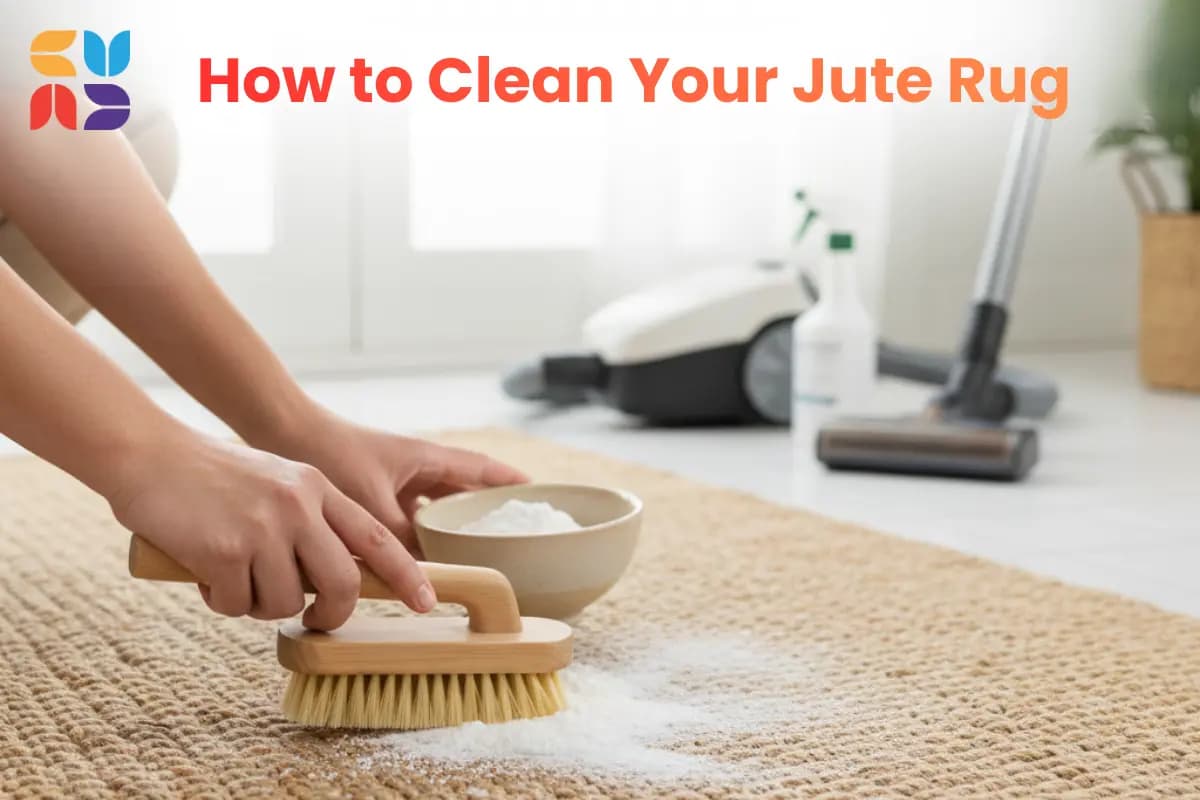
Brush In: Use a soft-bristle hand brush to gently work the powder into the weave.
Wait: Let it sit for 30–60 minutes. The powder will absorb dirt, oil, and humidity.
Vacuum: Thoroughly vacuum up the powder. You will be amazed at how much brighter the rug looks.
Troubleshooting: Common Jute Problems
1. Help! My Rug is Sprouting
Sometimes you will see a loose fiber poking out of the rug. This is called a "sprout" or "pop-up."
The Fix: Do not pull it. Pulling will unravel the weave. Simply take a pair of sharp scissors and snip the fiber level with the rug. It is safe and won't damage the structure.
2. Curling Corners
Jute rugs can curl at the corners due to high humidity or tight packaging.
The Fix: Dampen the curled area very slightly (do not soak). Place a heavy object, like a stack of books, on the corner overnight. The weight will train the fibers to lie flat again.
3. The "Clean" Water Stain
Sometimes, cleaning a spot with water leaves a brown ring. This is the natural oils of the jute rising to the surface.
The Fix: Blot the area with a 50/50 mix of white vinegar and water. The acidity in vinegar helps neutralize the browning. Dry it quickly with a hair dryer.
The "Impossible" Messes: Pets & Smells
How to Remove Pet Stains from Jute?
Pet accidents are tricky because of the ammonia smell.
Blot up the mess immediately.
Use Vinegar: Mix 50% white vinegar and 50% water. Vinegar neutralizes the ammonia smell in urine.
Dab gently. Do not soak.
Enzyme Cleaner: For bad odors, use a spot-spray enzyme cleaner. Check the label to ensure it is safe for natural fibers.
Help! My Jute Rug Smells Musty (The Monsoon Problem)
During the rainy season, jute rugs can absorb moisture from the air and smell like a damp basement.
The Fix: Sprinkle Baking Soda liberally over the rug. Let it sit overnight. The powder acts as a desiccant, sucking up the moisture and odors. Vacuum it up in the morning.
Sunlight: Put the rug outside in the sun for 1–2 hours. UV rays naturally kill mold spores.
Warning: Do not leave it in direct scorching sun for days, or the fiber will become brittle and fade.
Storing Your Jute Rug
If you are redecorating or moving, you need to store the rug correctly.
Clean it first: Vacuum thoroughly.
Roll, don't fold: Folding creates permanent creases that break the fibers.
Wrap it: Wrap it in a cotton sheet or muslin cloth (breathable). Do not use plastic. Plastic traps moisture and will cause mold in Bangladesh's climate.
Elevate: Store it off the floor in a cool, dry place.
Can I Use This Guide for Jute Placemats?
Yes! Jute Placemats and Coasters follow the exact same rules.
Shake them out after dinner to remove rice or crumbs.
Spot clean turmeric or oil stains immediately with a tiny drop of soap and damp cloth.
Storage: Store them flat in a dry drawer.
Never put them in the washing machine. The agitation will destroy the weave, and the water will cause them to lose their shape.
Conclusion: Love Your Jute
A jute rug is more than decor. It is a piece of nature in your home. It connects your modern lifestyle to our local heritage.
It doesn't need harsh chemicals or expensive machines. It just needs to be kept dry and clean. By following the Dry Extraction method and being careful during the monsoon, your eco-friendly rug will stay beautiful for years.
Ready to add more natural texture to your home? Explore the Hand-Woven Jute Collection at Kaaruj
Frequently Asked Questions
Why does my new jute rug shed?
Shedding is normal. Jute is a plant fiber spun into yarn. When it is new, loose, short fibers work their way out. Vacuum regularly (without the brush bar), and the shedding will stop after a few weeks.
Can I steam clean my jute rug?
No. Never use a steam cleaner. The hot steam forces water deep into the fibers. This causes mildew, discoloration, and can warp the shape of the rug permanently.
Is jute safe for high-traffic areas in BD?
Yes. Jute has high tensile strength. It is one of the most durable natural fibers on earth. It is perfect for entryways and living rooms in Dhaka homes. However, avoid placing it in bathrooms or damp basements where humidity is high.
How do I flatten a jute rug after unrolling it?
When you first unroll it, it may be bumpy. Roll it tightly in the opposite direction and let it sit for a few hours. Then lay it flat. Gravity will do the rest within 48 hours